Living in Rotterdam: why home buyers choose the city
Rotterdam appeals to home buyers through its mix of neighbourhoods, transport, city life and housing choices. Compare the fit for your household.
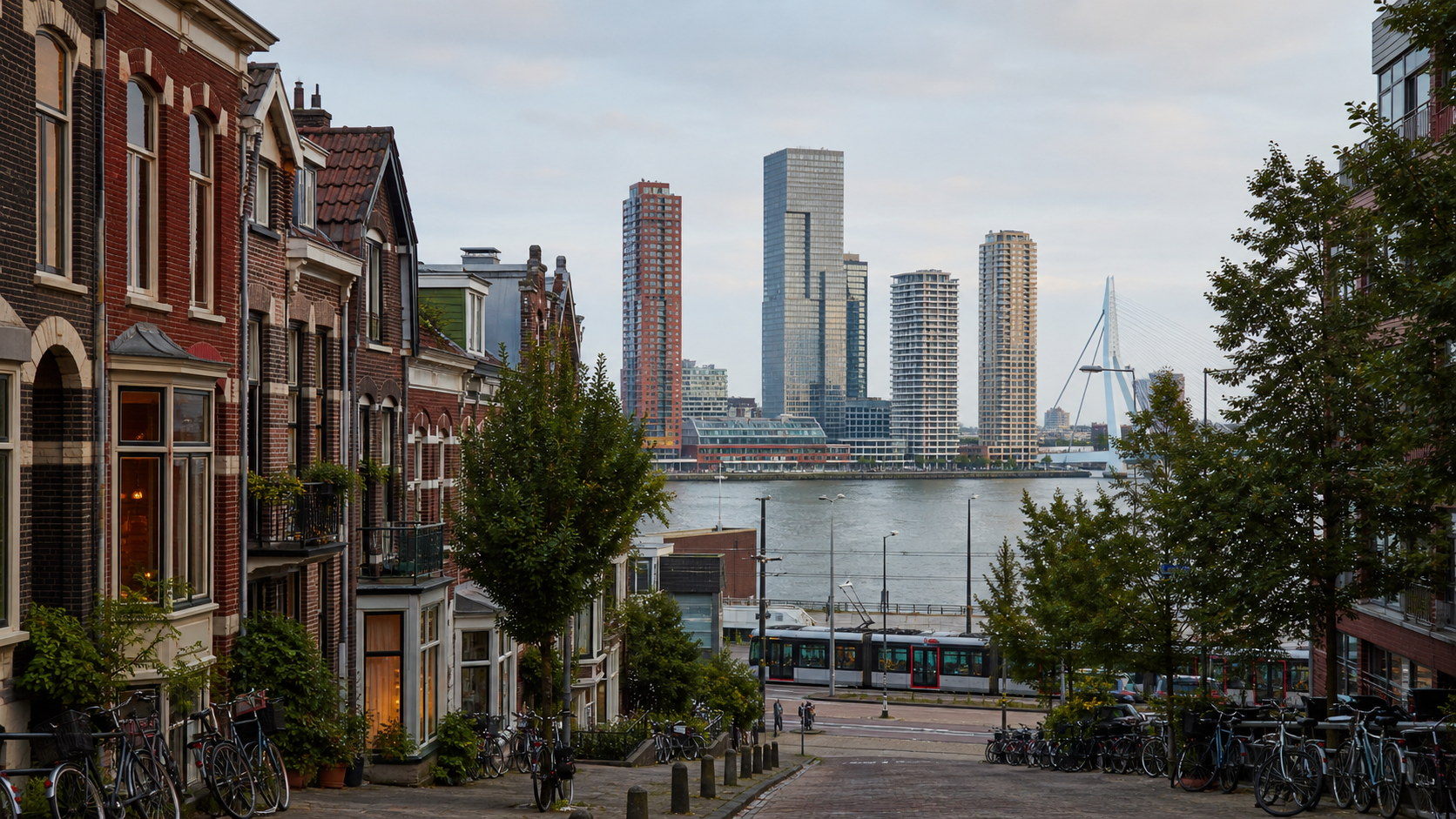
Rotterdam attracts home buyers who want city life with room to compare different ways of living. The municipality includes a dense centre, older residential streets, waterfront areas, family-oriented districts and greener edges. That range creates choice, and it also means that a citywide reputation says little about one household’s weekly routine.
Introduction
Short version: Rotterdam can fit a buyer who wants public transport, cultural life, water, work connections and a broad choice of housing types. The decision becomes clearer when you compare the exact street, building, travel pattern, outdoor space and ownership costs rather than treating the city name as a verdict.
CBS counted 255,615 dwellings in Rotterdam in 2025, representing the range of housing types a buyer may encounter. Population movement adds context for continuing demand, while it says nothing about the fit of a particular address. A household that enjoys a busy street may feel at home near the centre. A household that needs quiet evenings, a garden or simple parking may feel better served farther out.
Rotterdam’s long-term housing policy frames the city’s choices around liveable neighbourhoods, affordability and housing supply toward 2040. Policy gives useful context for the direction of the city. It cannot settle the noise, maintenance, school logistics or travel time attached to one home.
The Rotterdam Wijkprofiel 2024 gives housing-satisfaction figures of 72% in 2024 and 76% in 2020, a reminder that city popularity does not settle the fit of one address. Keep that citywide figure as context while you test the street and building yourself.
The right question is practical: which Rotterdam setting supports your life on an ordinary Tuesday, and which ownership responsibilities can your budget carry after the excitement of a viewing has passed?
Neighborhood Overview
Rotterdam is easier to compare through living patterns than through a simple list of “best” areas.
- Compact urban living: The centre and nearby districts can suit buyers who want shops, services, work connections and frequent public transport within short distances. Street activity, apartment living, limited private outdoor space and shared-building decisions may be part of the trade-off.
- Older residential streets: North and west-side residential areas can offer a different rhythm, with established streets, varied homes and local shopping. Building age, insulation, parking pressure and renovation history deserve close attention.
- Waterfront and renewed districts: Areas beside the Maas and former port zones can combine newer apartments, open views and changing public space. The view from a balcony does not answer questions about wind, noise, service charges or nearby construction.
- Greener outer districts: Outer neighbourhoods can give families more space, gardens or a calmer street pattern. The cost can appear in longer commutes, more car dependence or fewer walkable evening options.
The accompanying visual uses four lenses, city centre, residential districts, connections and green or waterfront space. Treat it as a thinking aid. Two streets in the same district can differ in light, noise, parking, building condition and access to daily services.
The traffic-circulation plan treats access by car, public transport, bicycle and foot as a neighbourhood question. That matches the way buyers should test a location. The nearest stop or cycle lane is only one part of a door-to-door journey.
The Rotterdam buying topics put mortgages, offers, legal steps and seller questions around the city choice.
A city-centre buyer can compare the Rotterdam city-centre housing context alongside quieter districts before choosing a viewing area.
When city fit looks promising, the Rotterdam home-buying sequence connects the shortlist to viewings, offers, contracts and transfer.

Cost of Living Analysis
A Rotterdam budget starts with the purchase price and continues into the costs of owning a specific home. The purchase cost categories belong in the budget before a neighbourhood preference becomes a viewing shortlist.
Separate the figures into four groups:
- Purchase and finance: deposit or own funds, lender costs, advice, valuation, transfer costs and any buyer-side service charges.
- Recurring home costs: mortgage payments, municipal charges, insurance, energy, water, maintenance and, for an apartment, the VvE contribution.
- Building-specific exposure: planned works, reserve-fund strength, shared installations, roof or facade work, lift maintenance and rules about alterations.
- Daily-life costs: commuting, parking, childcare, school travel, memberships and the time cost of a longer journey.
The same monthly housing payment can feel very different across the city. A smaller centre apartment may reduce some travel and increase VvE or storage costs. A larger outer-district home may offer a garden and more rooms while adding a car, longer commuting or higher repair exposure. Put the recurring costs beside the floor plan before comparing homes.
A buyer who settles on Rotterdam also needs the documents needed to buy a house in the Netherlands ready before turning a neighbourhood preference into an offer. Keep the local and national questions together: a neighbourhood choice shapes the home search, while the purchase process determines what must be confirmed before signing.
Schools and Education
For a family, a school name is only the starting point; the daily journey matters just as much. Check the distance from the exact address, walking and cycling conditions, public transport, morning timing, after-school arrangements and the number of changes required.
School fit also includes the home itself. A family may need a quiet study corner, storage for bikes, a safe trip to school, flexible rooms for changing ages or quick access to sports and care. A larger home farther from the preferred school can create a different week from a compact home close to it.
School availability, admissions and catchment arrangements can change. Confirm current conditions with the school, municipality or responsible education source before making a purchase decision. During a viewing, test the weekday sound level and walk the likely school journey at the time it would actually happen.
Lifestyle and Amenities
Rotterdam offers a mix of cultural venues, markets, parks, sports, waterfront walks, restaurants and local shopping. The useful comparison concerns frequency. A household that cycles to work, cooks most evenings and spends weekends outdoors needs a different location from a household that values late public transport, cafés and short walks to events.
Write down five ordinary activities and test each address against them. Include groceries, work or study, exercise, friends and a place to decompress. Note whether each activity works on foot, by bicycle, by public transport or by car. This exposes the gap between an attractive viewing day and a workable week.
Amenities also affect the inside of the home. A lively ground-floor street can support walkability and bring evening sound. A waterside setting can offer open space and expose the home to wind. A quiet street can improve rest and add a longer walk to shops. These are fit questions, not universal rankings.
Transportation and Commute
The nearest stop or cycle lane is only one part of a door-to-door journey, so measure the full trip at the time it will happen.
Measure the trip at the time it will happen. Include the walk from the front door, bike storage, waiting, transfers, school drop-off, parking, the last connection and the return trip. Compare a normal day with rain, a late finish and a weekend errand.
Rotterdam’s bus, tram and metro network can widen the set of homes a buyer can consider, while a reliable commute still depends on the exact address and destination. A central home may shorten one trip and make parking harder. A home near a major connection may save time and bring more movement nearby. A quieter district may work well when the household can cycle or work locally.
Future Development
Rotterdam’s housing policy looks toward 2040 and discusses liveable neighbourhoods, affordability and new homes. That gives buyers a reason to ask how a district may change. It does not give a date, design or outcome for the street beside a particular home.
For each shortlisted address, check municipal planning information, current building works, public-space plans, transport changes and the seller’s disclosure. Ask what is already approved, what is still under discussion and what physical signs are visible from the property. Read a balcony view as a current condition, not a permanent promise.
Future change can help a district gain services, housing and public space. It can also bring construction noise, altered traffic, new neighbours or a different view. Record both sides in the viewing notes and decide which uncertainty the household can carry.
Pros and Cons Summary
Rotterdam may suit your household when:
- you want a broad choice of urban and lower-density living patterns;
- public transport, cycling and city services matter in the weekly routine;
- you can compare building condition and recurring ownership costs with the location;
- you accept that neighbourhoods and public spaces can change over time.
Pause and investigate when:
- the city appeal is doing more work than the exact home and street;
- the budget covers the purchase payment but leaves no room for maintenance, energy or VvE changes;
- school, work or care journeys have not been tested at real times;
- a view, new-build promise or short commute has replaced checks on noise and building documents.
A citywide satisfaction figure cannot settle the fit of one address, so keep your comparison at street level.
Conclusion and Next Steps
Turn the city decision into a one-page comparison. Give every shortlisted home a score from 1 to 5 for daily travel, housing type, outdoor space, noise, school or care logistics, recurring costs, building condition and tolerance for planned change. Add a note explaining each score so the numbers do not hide an assumption.
Then take three actions:
- Visit the street at a weekday peak and a quiet period.
- Request the documents that explain ownership, maintenance and shared-building responsibilities.
- Compare the home against the household budget and the purchase sequence before making an offer.
When city fit looks promising, carry the shortlist into viewings, offers, contracts and transfer. If a question remains about comparing Rotterdam settings, the public contact form is available for a topic-specific question. Do not send passports, contracts, bank details or other personal documents through it.
This overview of living in Rotterdam is general information about city fit, neighbourhoods, transport, costs and everyday routines. Confirm legal, financial, housing and school decisions with the responsible qualified source or professional. If you have a question about choosing a Rotterdam neighbourhood, contact us through the public form and do not send passports, contracts, bank details or other personal documents.
Ask us about choosing a Rotterdam neighbourhood